
Anal Fissure Treatment in Limassol, Cyprus
An anal fissure is a small tear in the lining of the anal canal that causes sharp pain and bleeding, usually when passing stool. Most fissures settle with simple treatment; Dr. Koulouteris also offers minimally invasive surgery for fissures that do not heal on their own.
- First-line care
- Conservative treatment — fibre, fluids, topical creams, warm baths
- If needed
- Surgery
- Anaesthesia
- Local, regional or general — depends on the approach
- Procedure time
- Approx. 15–30 minutes for a surgical procedure
- Hospital stay
- Usually a day-case procedure
- Private or through GESY
- These operations are covered both within GESY and privately and/or through insurance funds.
What is an anal fissure?
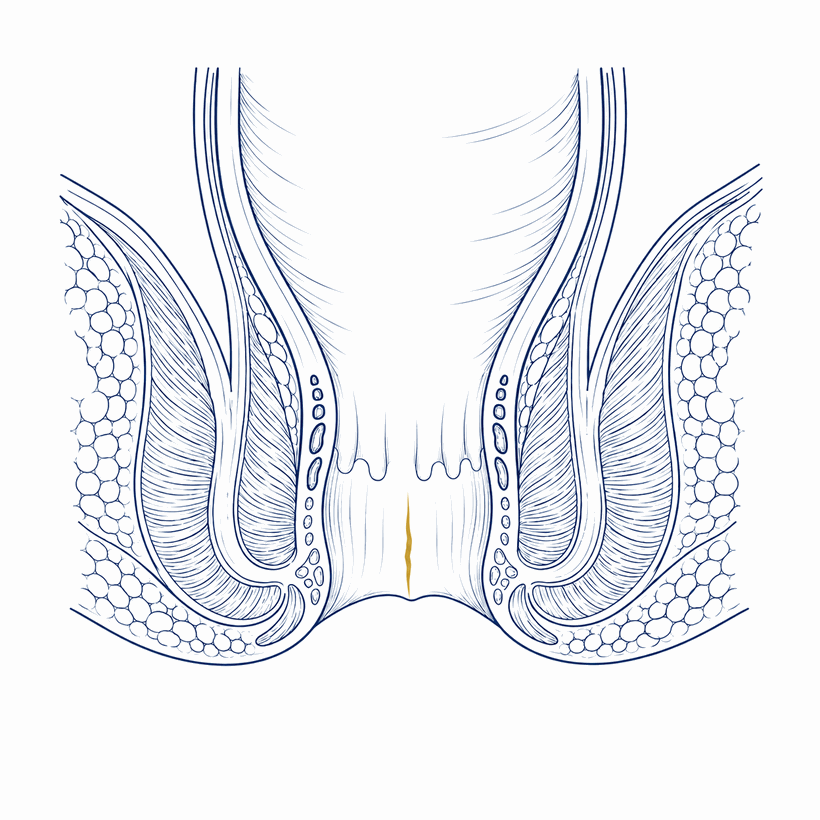
An anal fissure is a small tear or split in the thin, delicate lining of the anal canal. It is most often caused by passing a hard or large stool, but can also follow episodes of diarrhoea, straining or childbirth. The tear exposes the underlying muscle, which can go into spasm — this is what makes a fissure so painful and why it can be slow to heal. Most fissures occur in the midline at the back of the anal canal (the posterior midline).
Most acute fissures improve within a few weeks with simple measures that soften the stool and relax the muscle. When a fissure lasts longer than eight weeks it is considered chronic, and may need a procedure to break the cycle of spasm and allow it to heal. Dr. Koulouteris always begins with the least invasive approach that is likely to work.
A fissure that appears to the side of the anus, or several fissures at once, is less typical and prompts a check for an underlying condition such as Crohn’s disease.
Signs & symptoms of an anal fissure
An anal fissure is often mistaken for haemorrhoids. The pattern of pain is the clearest clue — consider an assessment if you have:
- Sharp, burning or tearing pain during a bowel movement
- Pain that can continue for minutes to hours afterwards
- Bright red blood on the stool or on the toilet paper
- A visible small tear or crack in the skin at the anus
- A spasm or tightening sensation in the anal muscle
- Itching or irritation around the anus
When to seek prompt care
Most fissures are not dangerous, but persistent bleeding, a change in bowel habit, or pain that does not settle should always be assessed — this rules out other causes and confirms the diagnosis. A fissure that has not healed after several weeks of self-care should be reviewed.
How an anal fissure is treated
Treatment follows a step-by-step approach. Most fissures heal with conservative care alone; if a fissure is chronic or keeps returning, Dr. Koulouteris discusses a minimally invasive option to relax the muscle and allow healing.
- 01
Consultation & diagnosis
A gentle examination confirms the fissure and rules out other causes of pain or bleeding. The most suitable plan is discussed with you.
- 02
Conservative treatment first
A high-fibre diet, plenty of fluids, warm baths and topical ointments — such as glyceryl trinitrate (GTN) or a calcium-channel-blocker cream — that relax the muscle and improve blood flow help most fissures heal without surgery.
- 03
Minimally invasive surgery (if needed)
If a chronic fissure has not healed after about 12 weeks of conservative treatment, a short procedure — most commonly a lateral sphincterotomy — releases a small part of the tight muscle and gives a high chance of lasting healing. The technique is chosen to protect continence.
What to know before treatment
- 01Tell the Doctor about all medication you take — some blood-thinning medicines may need to be paused before a procedure.
- 02If a surgical procedure is planned, you may be given simple preparation instructions.
- 03Arrange for someone to drive you home if sedation or general anaesthesia is used.
- 04Starting a high-fibre diet and good hydration early supports healing whichever treatment you have.
What recovery looks like
Recovery is usually quick and comfortable. The timeline below is a general guide — healing depends on whether the fissure was acute or chronic and the treatment used.
Day 1–3
After a procedure, mild discomfort is normal and managed with simple pain relief. Warm baths and a soft, regular stool make bowel movements easier.
Week 1
Most everyday activities and desk-based work can be resumed. Continue a high-fibre diet and good hydration.
Weeks 2–6
Pain settles steadily as the fissure heals. A follow-up appointment confirms healing is progressing well.
Beyond 6 weeks
Most fissures are fully healed. Keeping the stool soft long-term is the best way to prevent a fissure from returning.
Contact the clinic if you notice
- •Heavy or persistent bleeding
- •Pain that worsens rather than improves
- •Fever, increasing swelling or signs of infection
- •Any new difficulty controlling wind or bowel motions
Frequently asked questions
Many acute fissures heal within a few weeks with simple measures — a high-fibre diet, plenty of fluids, warm baths and topical creams. A fissure that lasts longer than eight weeks is considered chronic and usually needs a procedure to heal.
Discuss anal fissure treatment with Dr. Koulouteris
An anal fissure does not have to be something you live with. Book a consultation for a discreet assessment and a treatment plan suited to you.
This information is reviewed by Dr. Eleftherios Koulouteris, General & Laparoscopic Surgeon. It is for general guidance only and does not replace a personal medical consultation.