
Anal Fistula Surgery in Limassol, Cyprus
An anal fistula is a small tunnel that develops between the bowel and the skin near the anus, usually after an infection or abscess. Dr. Koulouteris treats anal fistulas surgically — choosing the technique that clears the fistula while protecting the sphincter muscles and continence. Minimally invasive laser (FiLaC®) and VAAFT options are also available.
- Technique
- Fistulotomy, seton or advancement flap, chosen to protect continence
- Anaesthesia
- Regional or general anaesthesia
- Procedure time
- Approx. 30–45 minutes, depending on the fistula
- Hospital stay
- Day-case or a short stay, depending on the case
- Return to routine
- Varies with the technique — often within a week or two
- Private or through GESY
- These operations are covered both within GESY and privately and/or through insurance funds.
What is an anal fistula?
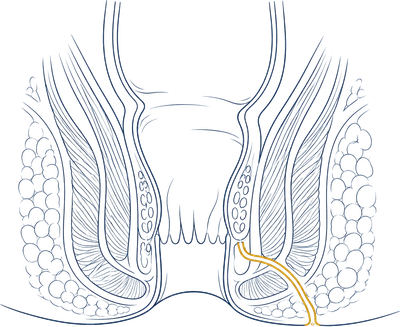
An anal fistula is a small, abnormal tunnel that forms between the inside of the anal canal or lower bowel and the skin near the anus. It most often develops after an anal abscess (a collection of pus) that has drained, leaving a persistent track behind.
Fistulas rarely heal on their own and usually need surgery to settle. The main challenge is to clear the fistula while protecting the anal sphincter muscles that control continence. The right operation depends on how much muscle the track crosses — Dr. Koulouteris selects from fistulotomy, seton placement and advancement-flap repair, and also offers minimally invasive options (FiLaC® laser and VAAFT).
Signs & symptoms of an anal fistula
Anal fistula symptoms can be ongoing or come and go. Common signs include:
- A persistent or recurring abscess (painful, swollen lump) near the anus
- Discharge of pus, blood or fluid from an opening in the skin near the anus
- Skin irritation or itching around the anus
- Pain that may throb and is often worse when sitting or during bowel movements
- A small opening in the skin near the anus that will not heal
- Fever or feeling generally unwell if infection is present
When to seek prompt care
A painful, swollen, hot area near the anus — especially with fever — may be an abscess that needs prompt drainage. Early treatment of an abscess can sometimes reduce the chance of a fistula forming, and ongoing symptoms should always be assessed.
How anal fistula surgery works
Treatment depends on the position of the fistula and how much sphincter muscle the track crosses. A low, simple fistula may be laid open (fistulotomy); a higher or more complex fistula may be managed with a seton (a soft thread that drains the track and protects the muscle) or an advancement flap that closes the internal opening. Dr. Koulouteris will recommend the safest technique for your case.
- 01
Consultation & assessment
The fistula is examined and its track mapped — sometimes with imaging such as MRI or ultrasound — to plan treatment that protects the sphincter muscles.
- 02
Anaesthesia
The operation is carried out under regional or general anaesthesia.
- 03
Fistula surgery
Depending on the track, the fistula is laid open (fistulotomy), a draining seton is placed, or an advancement flap closes the internal opening — chosen to clear the fistula while protecting the sphincter.
- 04
Recovery room
You are monitored after surgery and, for a day-case operation, usually return home the same day with clear aftercare instructions.
What to know before your surgery
- 01Tell the Doctor about all medication you take — some blood-thinning medicines may need to be paused.
- 02You may be given simple bowel-preparation instructions before the procedure.
- 03Arrange for someone to drive you home, particularly if sedation or general anaesthesia is used.
- 04Tell the Doctor about any previous anal or fistula surgery, which can affect planning.
What recovery looks like
Recovery depends on the technique used and the complexity of the fistula. A simple fistulotomy heals over a few weeks; a seton may stay in place for a period; flap repairs need protection while they heal. The timeline below is a general guide.
Day 1–3
Mild discomfort and a small amount of discharge are normal and managed with simple pain relief. Warm baths and gentle hygiene help.
Week 1–2
Most people return to everyday activities and desk-based work. Avoid heavy lifting and strenuous activity.
Weeks 2–6
Healing continues. Follow-up confirms the fistula is healing and continence is preserved.
Beyond 6 weeks
Most patients are fully recovered. Complex or recurrent fistulas may need more than one procedure.
Contact the clinic if you notice
- •Increasing pain, redness or swelling around the anus
- •Fever, or a return of abscess-like symptoms
- •Heavy or persistent bleeding
- •Difficulty controlling wind or stool
Frequently asked questions
Protecting continence is the central aim. The technique is chosen around how much muscle the fistula crosses — low fistulas can often be laid open safely, while higher fistulas are managed with a seton, an advancement flap or a sphincter-preserving option to protect the muscles that control continence.
Discuss anal fistula treatment with Dr. Koulouteris
An anal fistula will rarely heal without treatment. Book a consultation for an expert assessment and a treatment plan — surgical or minimally invasive — that protects your continence.
This information is reviewed by Dr. Eleftherios Koulouteris, General & Laparoscopic Surgeon. It is for general guidance only and does not replace a personal medical consultation.