
Appendix Removal in Limassol, Cyprus
Appendicitis — inflammation of the appendix — is a common surgical emergency that needs prompt treatment. Dr. Koulouteris removes the appendix laparoscopically wherever possible, through a few small incisions, for a faster and more comfortable recovery.
- Technique
- Laparoscopic (keyhole) appendectomy
- Anaesthesia
- General anaesthesia
- Procedure time
- Approx. 30–60 minutes. Depends on the case.
- Hospital stay
- Usually 1–3 nights, depending on the case
- Return to light activity
- Around 1–2 weeks
- Private or through GESY
- These operations are covered both within GESY and privately and/or through insurance funds.
What is an appendectomy?
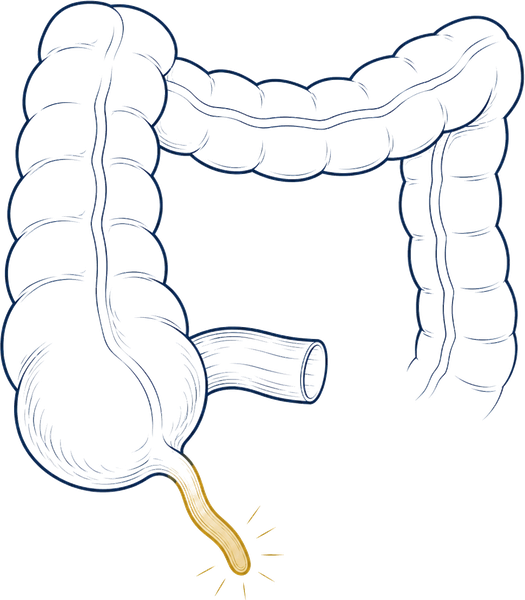
The appendix is a small, worm-shaped pouch attached to the large intestine. When it becomes blocked and inflamed — a condition called appendicitis — it causes increasing abdominal pain and, if untreated, can burst and lead to a serious infection and peritonitis.
An appendectomy is the surgical removal of the appendix and is the standard treatment for appendicitis. It is most often performed as an emergency. Dr. Koulouteris removes the appendix laparoscopically wherever possible — through a few small incisions rather than one larger one — which generally means less pain and a quicker recovery. The body functions normally without an appendix.
Signs & symptoms of appendicitis
Appendicitis usually develops quickly. Seek medical assessment without delay if you notice:
- Pain that often starts around the navel and moves to the lower right abdomen
- Pain that worsens with movement, coughing or pressing on the area
- Loss of appetite, nausea or vomiting
- A low-grade fever that may rise over time
- Abdominal swelling, or a tense and tender belly
- Constipation or diarrhoea alongside the abdominal pain
Appendicitis is an emergency
If you have severe or worsening abdominal pain, especially in the lower right side with fever or vomiting, seek medical attention immediately. Untreated appendicitis can lead to a burst appendix and a serious abdominal infection — early treatment is important.
How laparoscopic appendectomy is performed
Laparoscopic appendectomy removes the inflamed appendix through a few small incisions using a camera and fine instruments. The keyhole approach gives a clear view of the abdomen, with less pain and a quicker recovery than open surgery.
- 01
Diagnosis & assessment
A clinical examination, blood tests and imaging (such as ultrasound or CT) confirm appendicitis. The operation is explained to you.
- 02
Anaesthesia
The operation is carried out under general anaesthesia.
- 03
Keyhole removal
A few small incisions allow a camera and instruments to be introduced; the appendix is separated, sealed and removed. If the appendix has burst, the abdomen is also cleaned.
- 04
Closure & recovery
The incisions are closed and dressed. You are monitored and supported with pain relief during a short hospital stay, along with antibiotic treatment.
What to know about your surgery
- 01Appendectomy is usually carried out as an emergency, soon after diagnosis.
- 02You will be asked not to eat or drink once surgery is planned.
- 03Tell the medical team about all medication you take and any allergies.
- 04Pain relief and fluids are given through a drip while you are in hospital.
What recovery looks like
Recovery after laparoscopic appendectomy is usually straightforward. It can take a little longer if the appendix had burst. The timeline below is a general guide.
Day 1–2
Some soreness around the incisions is normal and managed with pain relief. Gentle walking is encouraged, and eating gradually returns to normal.
Week 1
Most light, everyday activities can be resumed. Avoid heavy lifting and strenuous effort.
Weeks 2–3
Energy returns and most restrictions ease. A follow-up appointment confirms healing is progressing well.
Beyond 3–4 weeks
Most patients return to full activity, including exercise, once cleared by the Doctor.
Contact the clinic if you notice
- •Increasing abdominal pain, redness or swelling around an incision
- •Fever, or discharge from a wound
- •Persistent nausea, vomiting or inability to eat or drink
- •A swollen, hard or very tender abdomen
Frequently asked questions
In selected cases antibiotics may be used, but surgery to remove the appendix remains the standard and most reliable treatment for appendicitis. The medical team will advise on the best approach for your situation.
Speak to Dr. Koulouteris
If you have concerns about abdominal pain or appendicitis, prompt assessment matters. Contact the clinic for advice or to arrange a consultation.
This information is reviewed by Dr. Eleftherios Koulouteris, General & Laparoscopic Surgeon. It is for general guidance only and does not replace a personal medical consultation.