
Breast Surgery in Limassol, Cyprus
Lumps and other changes in the breast are common and most often benign — but they should always be assessed. Dr. Koulouteris provides careful evaluation and surgical treatment of breast conditions, with attention to both health and appearance.
- Conditions treated
- Breast lumps, cysts, fibroadenomas and other breast conditions
- Anaesthesia
- General anaesthesia, or local anaesthesia in selected cases
- Procedure time
- Varies by procedure
- Hospital stay
- Often a day-case procedure, depending on the operation
- Return to light activity
- Typically 1–2 weeks
- Private or through GESY
- These operations are covered both within GESY and privately and/or through insurance funds.
Breast surgery explained
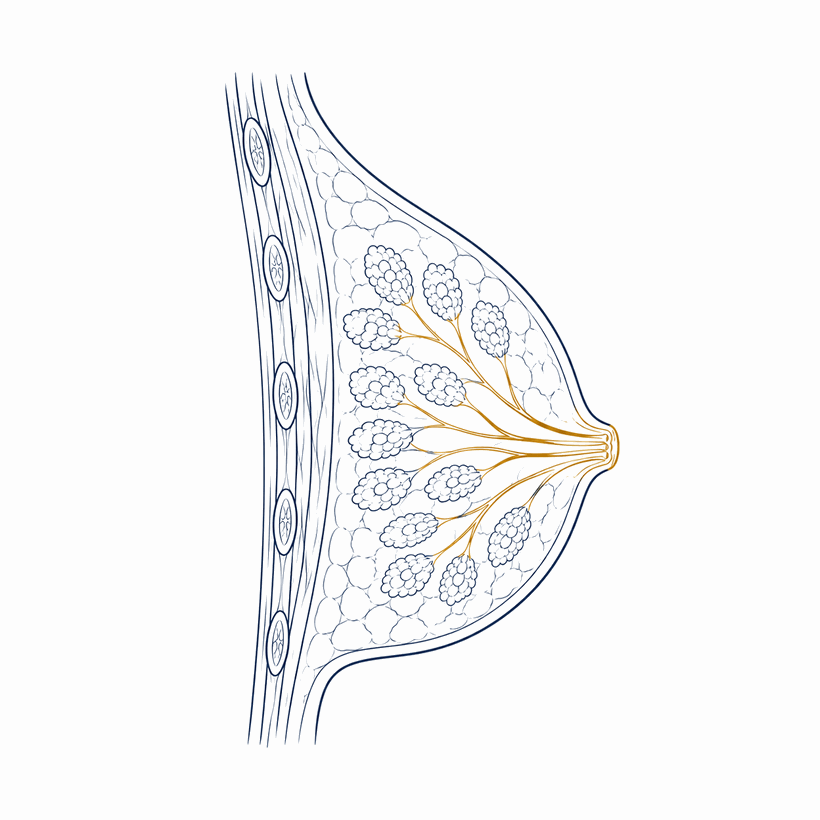
The breast is a common site for lumps, cysts and other changes. The large majority are benign — such as fibroadenomas or simple cysts — but because some require treatment, and a small number need to be excluded as something more serious, any new or changing lump should be properly assessed.
Dr. Koulouteris evaluates breast conditions and carries out the surgery they may require, from removing a benign breast lump to taking a tissue sample for diagnosis. Care is planned around each patient, with attention to both health and appearance and, where appropriate, alongside other specialists.
Breast changes that should be assessed
Most breast changes are harmless, but the following should always be checked by a doctor:
- A new lump or thickening in the breast or underarm
- A change in the size, shape or contour of the breast
- Skin changes such as dimpling, puckering or redness
- Nipple changes, including inward turning or discharge
- New, persistent breast pain in one area
- Any lump that is new, growing or causing concern
Have any new breast lump checked
Most breast lumps are benign, but they should never be ignored. Prompt assessment allows reassurance in the great majority of cases and early treatment in the few that need it. Any new lump, skin or nipple change deserves a professional opinion.
How breast surgery is approached
Treatment always begins with a careful assessment to reach a clear diagnosis. Surgery, when needed, is planned specifically for the condition and the individual.
- 01
Consultation & assessment
A clinical examination and, where needed, imaging (ultrasound or mammogram) and a tissue sample reach a clear diagnosis before any decision about surgery.
- 02
Planning
If surgery is recommended, the procedure, anaesthesia and expected recovery are explained, and any questions discussed.
- 03
The operation
Surgery is tailored to the specific condition — for example removing a benign lump (excision) or taking a larger tissue sample — with attention to a neat, well-placed scar.
- 04
Recovery & follow-up
You are monitored after surgery and seen for follow-up, when results are discussed and any onward care arranged.
What to know before your surgery
- 01You may be asked to stop eating and drinking for several hours before the operation.
- 02Tell the Doctor about all medication you take — some blood-thinning medicines may need to be paused.
- 03Arrange for someone to drive you home after the procedure.
- 04Any further imaging or tests needed before surgery will be arranged in advance.
What recovery looks like
Recovery depends on the specific procedure. The general guide below applies to many breast operations — your own plan is discussed with you.
Day 1–2
Some soreness or bruising around the wound is normal and managed with simple pain relief. Most patients are up and about soon after surgery.
Week 1
Many everyday activities can be resumed. Avoid heavy lifting and strenuous effort, and wear a supportive bra if advised.
Weeks 2–3
The wound continues to heal. A follow-up appointment reviews healing and any test results.
Beyond 3–4 weeks
Most patients return to full activity. Any ongoing care or monitoring is arranged as needed.
Contact the clinic if you notice
- •Increasing pain, redness or swelling around the wound
- •Fever, or discharge from the incision
- •A rapidly growing swelling or collection at the surgical site
- •Bleeding that does not settle with gentle pressure
Frequently asked questions
No — the large majority are benign, such as fibroadenomas or cysts. Assessment matters precisely so that the few that need treatment are found early, and so that most people can be reassured.
Discuss breast surgery with Dr. Koulouteris
If you have noticed a lump or change in the breast, a professional assessment brings clarity. Book a consultation with Dr. Koulouteris.
This information is reviewed by Dr. Eleftherios Koulouteris, General & Laparoscopic Surgeon. It is for general guidance only and does not replace a personal medical consultation.