
FiLaC® Laser Anal Fistula Treatment in Limassol, Cyprus
An anal fistula is a small tunnel that develops between the inside of the anus and the nearby skin, usually after an infection. Dr. Koulouteris treats fistulas with minimally invasive, sphincter-preserving techniques — laser closure (FiLaC®) and VAAFT — that support a gentler recovery.
- Technique
- FiLaC® laser closure or VAAFT (minimally invasive)
- Anaesthesia
- Regional or general anaesthesia
- Procedure time
- Approx. 30–60 minutes
- Hospital stay
- Day-case or one overnight stay
- Return to routine
- Often within a few days
- Private or through GESY
- These operations are covered both within GESY and privately and/or through insurance funds.
What is an anal fistula?
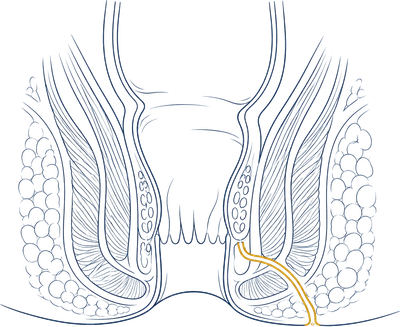
An anal fistula is a small abnormal tunnel that forms between the anal canal and the skin around the anus. It usually develops after an infection in a small anal gland, which can form an abscess that then drains and leaves a persistent track behind.
Anal fistulas do not heal on their own and tend to cause recurring discomfort, discharge and infection. Treatment is surgical. Dr. Koulouteris uses minimally invasive, sphincter-preserving techniques — FiLaC® laser closure and VAAFT (Video-Assisted Anal Fistula Treatment) — which aim to close the fistula while protecting the anal muscle that controls continence.
Fistulas range from simple (a single, low track) to complex (a higher track, several tracks, or one linked to an ongoing abscess); the right technique depends on the type.
Signs & symptoms of an anal fistula
An anal fistula often follows an earlier abscess. Consider an assessment if you have:
- A small opening in the skin near the anus, sometimes leaking fluid
- Discharge of pus, blood or an unpleasant fluid
- Recurring pain, swelling or irritation around the anus
- Skin irritation or itching around the opening
- A recurring abscess or lump in the same area
- Pain that may increase when sitting or during a bowel movement
When to seek prompt care
If the area becomes acutely painful, swollen and hot, or you develop a fever, an abscess may be present and needs prompt drainage. Early assessment of any persistent opening or discharge near the anus helps prevent repeated infections.
How anal fistula treatment works
Dr. Koulouteris selects the most appropriate minimally invasive technique for each fistula. Both FiLaC® and VAAFT treat the fistula from within and are designed to protect the anal sphincter muscle, reducing the risk to continence compared with older cutting techniques. Reported success is high — around 85% for FiLaC® and 70–80% for VAAFT.
- 01
Consultation & assessment
A clinical examination and, where needed, imaging such as an MRI or endoscopic ultrasound maps the fistula track. The most suitable technique is discussed and agreed with you.
- 02
Anaesthesia
The treatment is carried out under regional or general anaesthesia.
- 03
Minimally invasive closure
With FiLaC®, a fine laser fibre seals the fistula track from within; with VAAFT, a tiny camera is used to locate and treat the track precisely. Neither approach cuts through the sphincter muscle.
- 04
Recovery room
You are monitored briefly and return home the same day or after one overnight stay.
What to know before your treatment
- 01You may be given simple bowel-preparation instructions before the procedure.
- 02Tell the Doctor about all medication you take — some blood-thinning medicines may need to be paused.
- 03Arrange for someone to drive you home, particularly if sedation or general anaesthesia is used.
- 04If an abscess is present, it is usually drained first and the fistula treated at a later stage.
What recovery looks like
Recovery after minimally invasive fistula treatment is usually comfortable. The timeline below is a general guide — healing depends on the complexity of the fistula.
Day 1–2
Mild discomfort and a small amount of discharge are normal and managed with simple pain relief. Warm baths and gentle hygiene help.
Week 1
Most everyday activities and desk-based work can be resumed. Keep the area clean as advised.
Weeks 2–4
The track continues to heal. A follow-up appointment confirms healing is progressing well.
Beyond 4 weeks
Most patients are back to their full routine. Some fistulas need more than one treatment to heal fully.
Contact the clinic if you notice
- •Increasing pain, redness or swelling around the area
- •Fever, or a returning abscess
- •Heavy bleeding or persistent discharge
- •Any new difficulty controlling wind or bowel motions
Frequently asked questions
Protecting continence is a key priority. FiLaC® and VAAFT are sphincter-preserving techniques — they treat the fistula without cutting through the muscle that controls the bowel, which lowers the risk compared with older methods.
Discuss anal fistula treatment with Dr. Koulouteris
An anal fistula needs proper treatment to heal. Book a consultation for a discreet assessment and a minimally invasive plan suited to you.
This information is reviewed by Dr. Eleftherios Koulouteris, General & Laparoscopic Surgeon. It is for general guidance only and does not replace a personal medical consultation.