
Laparoscopic Colectomy in Limassol, Cyprus
A colectomy is an operation to remove part of the large bowel (colon). Dr. Koulouteris performs colectomy using a laparoscopic — keyhole — approach where suitable, which means smaller incisions, less pain and a quicker recovery than traditional open surgery.
- Technique
- Laparoscopic (keyhole) colectomy — open surgery if it is the safer option
- Anaesthesia
- General anaesthesia
- Procedure time
- Varies with the extent of the resection
- Hospital stay
- Typically a few days
- Return to routine
- Gradual over several weeks
- Private or through GESY
- These operations are covered both within GESY and privately and/or through insurance funds.
What is a laparoscopic colectomy?
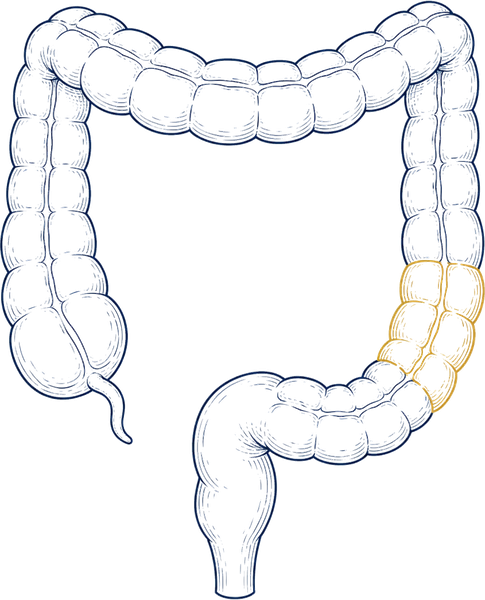
A colectomy is the surgical removal of part — or, less commonly, all — of the colon, the main part of the large bowel. After the affected segment is removed, the two healthy ends are usually rejoined so the bowel continues to work normally. A related operation, enterectomy, removes a section of the small bowel.
In a laparoscopic colectomy the operation is carried out through several small incisions using a camera and fine instruments, rather than one large cut. For suitable patients this keyhole approach offers less post-operative pain, a shorter hospital stay and a faster return to normal activity, while achieving the same surgical result as open surgery. Dr. Koulouteris advises on whether a laparoscopic or open approach is right for your situation.
When a colectomy may be recommended
A colectomy is recommended after a full assessment, usually for one of the following reasons. Your surgeon will explain exactly why it is being considered in your case:
- Bowel (colorectal) cancer or a confirmed pre-cancerous condition
- Large or high-risk polyps that cannot be removed during a colonoscopy
- Diverticular disease causing recurrent infection, bleeding or complications
- Inflammatory bowel disease (such as Crohn’s disease or ulcerative colitis) that is not controlled by medication
- A bowel blockage (obstruction)
- Persistent bleeding or other significant bowel problems identified on investigation
When to seek prompt care
Symptoms such as a persistent change in bowel habit, blood in the stool, unexplained weight loss, ongoing abdominal pain or new severe abdominal pain should always be assessed. Early investigation allows any bowel condition to be diagnosed and treated at the most favourable stage.
How a laparoscopic colectomy works
A colectomy is carefully planned around your diagnosis and overall health. The steps below give a general outline — the exact extent of surgery is tailored to your individual case.
- 01
Consultation, staging & planning
Investigations such as colonoscopy and imaging confirm the diagnosis and define which part of the bowel is affected. The plan, approach and what to expect are discussed fully with you.
- 02
Preparation & anaesthesia
You may be given bowel-preparation instructions beforehand. The operation is carried out under general anaesthesia.
- 03
Laparoscopic resection
Through several small incisions, a camera and fine instruments are used to free and remove the affected segment of bowel. The healthy ends are then rejoined (an anastomosis).
- 04
Recovery room & early mobilisation
You are monitored closely after surgery. Getting moving early, with the team’s support, is encouraged as it aids recovery.
What to know before your surgery
- 01Tell the Doctor about all medication you take — some, particularly blood-thinning medicines, may need to be adjusted or paused.
- 02You may be given specific bowel-preparation and fasting instructions before the operation.
- 03In some cases a temporary or permanent stoma may be needed — if this is a possibility, it is discussed with you in advance.
- 04Arrange support at home for the first weeks of recovery, and someone to bring you home from hospital.
What recovery looks like
Recovery after a laparoscopic colectomy is usually quicker than after open surgery, but it is still major surgery. The timeline below is a general guide — your team will give advice specific to you.
In hospital
You are supported to start moving, drinking and eating gradually. Pain is managed closely and your recovery is monitored before you go home.
Week 1–2
Rest is balanced with gentle, regular walking. Lifting and strenuous activity are avoided while the incisions and bowel heal.
Weeks 3–6
Energy and appetite steadily improve. Most light activities are resumed, with a follow-up appointment to review your progress and any results.
Beyond 6 weeks
Most people return to their normal routine, building back to fuller activity as advised. Any longer-term follow-up is planned with you.
Contact the clinic if you notice
- •Increasing abdominal pain, swelling or hardness
- •Fever, or redness and discharge from an incision
- •Persistent vomiting, or being unable to pass wind or open your bowels
- •Heavy or persistent bleeding
Frequently asked questions
For suitable patients, keyhole surgery means smaller incisions, less post-operative pain, a shorter hospital stay and a faster return to normal activity — while achieving the same result as open surgery. Not every case is suitable, and your surgeon will advise on the safest approach for you.
Discuss laparoscopic colectomy with Dr. Koulouteris
If bowel surgery has been raised with you, a consultation gives you a clear explanation and a plan suited to your diagnosis. Book an appointment with Dr. Koulouteris.
This information is reviewed by Dr. Eleftherios Koulouteris, General & Laparoscopic Surgeon. It is for general guidance only and does not replace a personal medical consultation.