
Liver, Biliary & Pancreatic Surgery in Limassol, Cyprus
The liver, gallbladder, bile ducts and pancreas work closely together in digestion, and conditions affecting them range from gallstones to cysts, inflammation and tumours. Dr. Koulouteris assesses and treats a range of these conditions, using minimally invasive techniques where suitable.
- Area treated
- Liver, gallbladder, bile ducts (biliary tree) and pancreas
- Technique
- Laparoscopic or classic open surgery
- Anaesthesia
- General anaesthesia
- Hospital stay
- Varies with the condition and operation
- Return to routine
- Depends on the procedure — from a few days to several weeks
- Private or through GESY
- These operations are covered both within GESY and privately and/or through insurance funds.
Conditions of the liver, biliary tree & pancreas
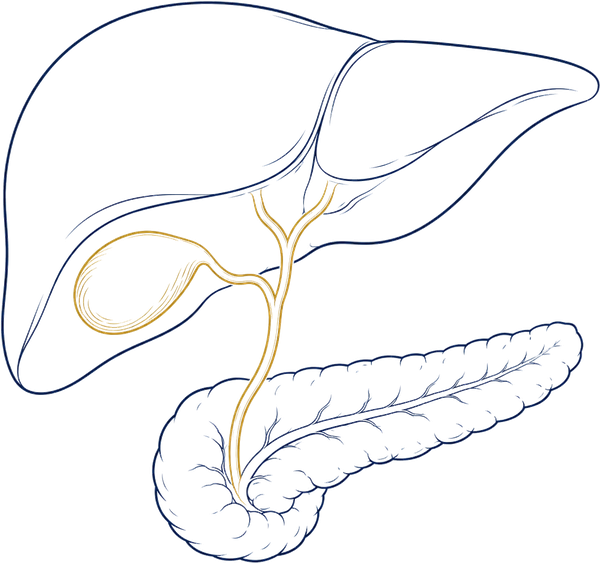
The liver, gallbladder, bile ducts (the biliary tree) and pancreas form a closely linked system that is central to digestion. Conditions affecting this area include gallstones and bile-duct stones, cysts, inflammation such as pancreatitis, and benign or malignant tumours. Symptoms can overlap, which is why careful assessment and imaging are important to reach the right diagnosis.
Dr. Koulouteris assesses conditions of this system and provides surgical treatment where this is required. The most common operation in this group — gallbladder removal — has its own detailed page; this overview covers the wider range of liver, biliary and pancreatic conditions that may need surgical care.
Symptoms & conditions in this area
These conditions are usually identified after assessment and imaging. It is worth seeking advice if you have:
- Pain in the upper-right or upper-central abdomen, sometimes after eating fatty food
- Yellowing of the skin or the whites of the eyes (jaundice)
- Gallstones or bile-duct stones found on a scan
- A cyst, lesion or mass identified in the liver or pancreas on imaging
- Recurrent episodes of inflammation, such as pancreatitis
- Unexplained weight loss, nausea or digestive symptoms that need investigation
- Darkening of the urine (cognac-coloured) and pale (whitish) stools
When to seek prompt care
Yellowing of the skin or eyes, severe or persistent pain in the upper abdomen, or fever with abdominal pain should be assessed without delay, as these can point to a blocked bile duct or infection. Early diagnosis allows the most effective treatment to be planned.
How these conditions are treated
Treatment is tailored to the specific condition — not every problem needs surgery. The steps below describe the general pathway from assessment to treatment.
- 01
Consultation & investigation
Your symptoms are assessed and investigations such as ultrasound, other imaging and blood tests are used to reach a clear, accurate diagnosis.
- 02
Planning the right treatment
The findings are explained and a treatment plan is agreed. Some conditions are monitored or managed without surgery; others are best treated with an operation.
- 03
Surgery — minimally invasive where possible
Where surgery is needed, a laparoscopic (keyhole) approach is used wherever it is suitable and safe. An open approach is chosen if it is the safer option for your case.
- 04
Recovery & follow-up
You are supported through recovery, and follow-up appointments review your progress and any results, and plan any further care.
What to know before treatment
- 01Bring all imaging and test results you have, as these help confirm the diagnosis and plan treatment.
- 02Tell the Doctor about all medication you take — some, particularly blood-thinning medicines, may need to be adjusted.
- 03Mention any condition affecting your general health or healing, such as diabetes.
- 04If an operation is planned, you will be given specific preparation instructions in advance.
What recovery looks like
Recovery depends entirely on the condition and the operation performed. The stages below describe the general path rather than a fixed timeline.
Early
After any operation you are supported through the first stage of recovery, with pain managed closely and gentle movement encouraged.
First weeks
Energy and appetite gradually return. Activity is built back up at a pace suited to the procedure you have had.
Follow-up
A review appointment confirms healing is progressing well and discusses any results and next steps.
Longer term
Most people return fully to their routine. Any longer-term monitoring is planned with you according to the condition.
Contact the clinic if you notice
- •Yellowing of the skin or eyes, or pale stools and dark urine
- •Increasing abdominal pain, swelling or hardness
- •Fever, or redness and discharge from an incision
- •Persistent vomiting, or heavy or persistent bleeding
Frequently asked questions
No. Some conditions of the liver, biliary tree and pancreas are monitored or managed without an operation. The aim of assessment is to reach a clear diagnosis and recommend the most appropriate treatment — which may or may not be surgical.
Discuss liver, biliary & pancreatic surgery with Dr. Koulouteris
If a condition of the liver, gallbladder, bile ducts or pancreas has been raised with you, a consultation gives you a clear diagnosis and the options. Book an appointment with Dr. Koulouteris.
This information is reviewed by Dr. Eleftherios Koulouteris, General & Laparoscopic Surgeon. It is for general guidance only and does not replace a personal medical consultation.