
Laparoscopic Lysis of Adhesions in Limassol, Cyprus
Adhesions are bands of internal scar tissue that can form inside the abdomen, often after previous surgery, and may cause pain or bowel problems. Lysis of adhesions — adhesiolysis — is surgery to carefully divide these bands, performed by Dr. Koulouteris with a laparoscopic, keyhole approach where suitable.
- Technique
- Laparoscopic (keyhole) division of adhesions — open surgery if it is the safer option
- Anaesthesia
- General anaesthesia
- Procedure time
- Varies with the extent of the adhesions
- Hospital stay
- Day-case to a few days, depending on the case
- Return to routine
- Gradual, over one to several weeks
- Private or through GESY
- These operations are covered both within GESY and privately and/or through insurance funds.
What are adhesions?
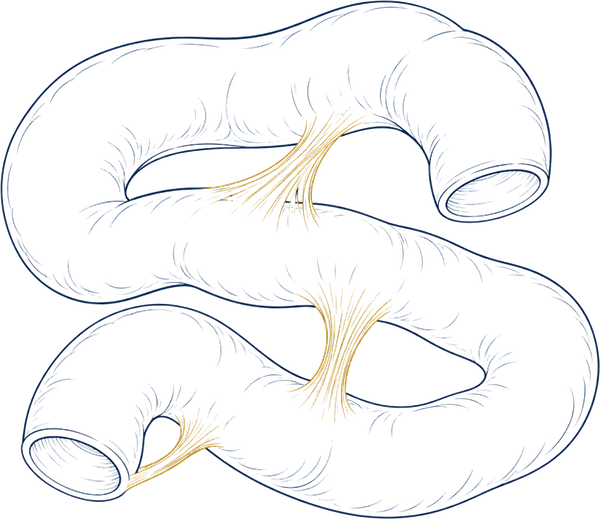
Adhesions are bands of scar-like tissue that form between organs and the inner surfaces of the abdomen. They develop most commonly after previous abdominal or pelvic surgery, but can also follow an infection or inflammation. Many adhesions cause no problems at all and need no treatment.
Sometimes, however, adhesions tether or pull on the bowel and other organs. This can cause recurring abdominal pain or, in some cases, partially or completely block the bowel. When adhesions are causing significant symptoms, lysis of adhesions — an operation to carefully cut and release these bands — can relieve the problem. Dr. Koulouteris uses a laparoscopic approach where it is suitable and safe.
When lysis of adhesions may be recommended
Surgery for adhesions is considered when they are clearly causing symptoms. The Doctor will explain whether it is the right step in your case. It may be recommended for:
- Recurring crampy abdominal pain, often in someone who has had previous abdominal surgery
- Episodes of bowel obstruction — bloating, vomiting and being unable to pass wind or stool
- Repeated hospital admissions for partial bowel obstruction
- Chronic abdominal or pelvic pain linked to previous surgery, infection or inflammation
- Symptoms that the history and investigations suggest are caused by adhesions
- A bowel blockage that does not settle with non-surgical treatment
When to seek prompt care
Sudden severe abdominal pain with bloating, vomiting and an inability to pass wind or open the bowels can be a sign of a bowel obstruction and needs urgent assessment. Recurring or unexplained abdominal pain, particularly after previous surgery, should always be reviewed.
How lysis of adhesions works
The operation is carefully planned around your symptoms and surgical history. The steps below give a general outline — the exact extent of surgery depends on what is found.
- 01
Consultation & assessment
Your symptoms, previous operations and any imaging are reviewed to confirm that adhesions are the likely cause and that surgery is appropriate. The plan is discussed with you.
- 02
Anaesthesia
The operation is carried out under general anaesthesia.
- 03
Laparoscopic division of adhesions
Through small incisions, a camera and fine instruments are used to identify the adhesions and carefully cut and release them, freeing the affected organs.
- 04
Recovery room
You are monitored after surgery. Early, gentle movement is encouraged, and your recovery is reviewed before you go home.
What to know before your surgery
- 01Tell the Doctor about all medication you take — some, particularly blood-thinning medicines, may need to be adjusted or paused.
- 02Bring details of any previous abdominal or pelvic operations, as these help plan the surgery.
- 03Fasting instructions are given for the hours before the operation.
- 04Arrange for someone to bring you home, and for support during the first part of recovery.
What recovery looks like
Recovery depends on how extensive the adhesions were and whether the keyhole approach was used throughout. The timeline below is a general guide.
Day 1–2
Mild discomfort around the small incisions is normal and managed with simple pain relief. You are encouraged to move gently and the bowel is monitored as it settles.
Week 1
Lighter everyday activities are gradually resumed. Heavy lifting and strenuous exercise are avoided while healing continues.
Weeks 2–4
Energy steadily returns. A follow-up appointment reviews your recovery and how your symptoms have responded.
Beyond 4 weeks
Most people are back to their normal routine. Recovery may be longer if the adhesions were extensive or open surgery was needed.
Contact the clinic if you notice
- •Increasing abdominal pain, swelling or hardness
- •Vomiting, or being unable to pass wind or open your bowels
- •Fever, or redness and discharge from an incision
- •Heavy or persistent bleeding
Frequently asked questions
It is possible. Because the surgery itself involves working inside the abdomen, new adhesions can sometimes form. The aim of lysis of adhesions is to relieve the symptoms that are troubling you now; the Doctor will discuss this balance and what to expect in your case.
Discuss lysis of adhesions with Dr. Koulouteris
If adhesions are causing pain or bowel problems, a consultation can clarify the cause and the options. Book an appointment with Dr. Koulouteris.
This information is reviewed by Dr. Eleftherios Koulouteris, General & Laparoscopic Surgeon. It is for general guidance only and does not replace a personal medical consultation.