
Trauma & Injury Care in Limassol, Cyprus
Cuts, lacerations and other traumatic injuries heal best when they are cleaned and repaired properly. Dr. Koulouteris provides expert treatment of traumatic wounds and soft-tissue injuries — careful cleaning, secure repair and clear aftercare to support good healing. Dr. Koulouteris is the current President of the Cyprus Wound Management Society and a board member of the Cyprus Surgical Society.
- Care provided
- Cleaning, repair and closure of traumatic wounds and soft-tissue injuries
- Anaesthesia
- Usually local anaesthesia
- Procedure time
- Varies with the size and complexity of the wound
- Setting
- Outpatient care for most wounds
- Return to routine
- Varies with the injury — often a few days to a few weeks
- Private or through GESY
- These operations are covered both within GESY and privately and/or through insurance funds.
What is trauma & injury care?
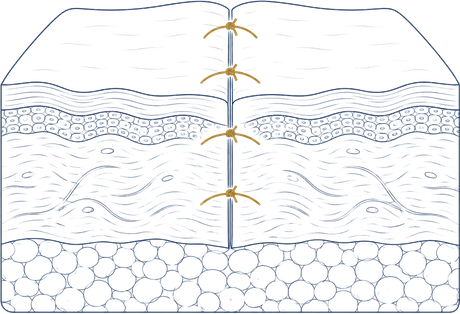
Traumatic injuries include cuts, lacerations, deep or gaping wounds, puncture wounds and soft-tissue injuries. How a wound is treated in the first hours and days has a real effect on how well it heals — proper cleaning lowers the risk of infection, and a secure, well-judged repair supports healing and a neater scar.
Dr. Koulouteris assesses and treats traumatic wounds and soft-tissue injuries: cleaning the wound thoroughly, removing any dirt or foreign material, checking for deeper damage and closing the wound with the most appropriate technique. Where an injury is severe or life-threatening, emergency services should always be contacted first — this page covers the planned and outpatient care of wounds and injuries.
When a wound needs professional care
Minor grazes can often be cared for at home, but many wounds heal better with professional treatment. Seek care if you have:
- A cut or laceration that is deep, gaping or does not stop bleeding with gentle pressure
- A wound contaminated with dirt, grit or other foreign material
- A wound on the face, hand or over a joint, where careful repair matters
- A puncture wound or bite, which carries a higher risk of infection
- A soft-tissue or crush injury
- A wound showing signs of infection — increasing redness, swelling, warmth or discharge
When to seek emergency care
For severe or life-threatening injuries, heavy bleeding that does not stop, or a serious accident, contact emergency services or go to the nearest emergency department straight away. Also seek urgent care for a wound with loss of sensation or movement, or where a deep foreign body may be present.
How traumatic wounds are treated
Treatment is tailored to the type, size and location of the wound. The steps below give a general outline of what proper wound care involves.
- 01
Assessment & cleaning
The wound is examined to check its depth and whether deeper structures are involved, then thoroughly cleaned to remove dirt and foreign material and reduce the risk of infection.
- 02
Wound repair
Under local anaesthesia, the wound is closed using the most appropriate method — such as sutures — to bring the edges together securely and support a neat result.
- 03
Tetanus & infection prevention
Your tetanus protection is checked and updated if needed, and antibiotics are considered where the risk of infection is higher, such as with bites or contaminated wounds.
- 04
Dressing & aftercare advice
A suitable dressing is applied and you are given clear instructions for keeping the wound clean, knowing what to watch for, and when any sutures should be removed.
What to know about your care
- 01Tell the Doctor how and when the injury happened, and whether the wound may be contaminated.
- 02Mention all medication you take, particularly blood-thinning medicines, and any condition affecting healing such as diabetes.
- 03Let the Doctor know when you last had a tetanus vaccination, if you can.
- 04A wound generally heals best when treated sooner rather than later — do not delay having it assessed.
What recovery looks like
Healing depends on the size, depth and location of the wound. The timeline below is a general guide — you will be given advice specific to your injury.
Day 1–3
The wound is kept clean and dry as advised. Mild discomfort is normal and managed with simple pain relief. Watch for any signs of infection.
Week 1
The wound begins to heal. Dressings are changed as instructed, and activity is adjusted to protect the area while it knits together.
Weeks 1–2
Any sutures are usually removed within this period, depending on the wound and its location. Healing is reviewed at a follow-up.
Beyond 2 weeks
The wound continues to strengthen and the scar matures over the following weeks and months. Simple scar care and sun protection help the final appearance.
Contact the clinic if you notice
- •Increasing pain, redness, swelling or warmth around the wound
- •Discharge of pus or an unpleasant odour
- •Fever or generally feeling unwell
- •Bleeding that restarts, or the wound edges coming apart
Frequently asked questions
A cut generally needs professional repair if it is deep or gaping, will not stop bleeding, is on the face or hand, or crosses a joint. An assessment confirms whether sutures or another method of closure is best — and proper cleaning is just as important as closure.
Discuss trauma & injury care with Dr. Koulouteris
A wound treated properly heals better. Book an appointment with Dr. Koulouteris for expert assessment and care of a cut, laceration or soft-tissue injury.
This information is reviewed by Dr. Eleftherios Koulouteris, General & Laparoscopic Surgeon. It is for general guidance only and does not replace a personal medical consultation. For severe or life-threatening injuries, contact emergency services.