
CO2 Laser Verruca & Callus Removal in Limassol, Cyprus
Verrucas and thickened calluses can be painful and stubborn, often resisting creams and over-the-counter remedies. Dr. Koulouteris removes them with a CO2 laser — a precise, controlled treatment that targets the lesion while protecting the healthy skin around it.
- Technique
- CO2 laser ablation — precise, controlled removal
- Anaesthesia
- Local anaesthesia
- Procedure time
- Approx. 15–30 minutes
- Hospital stay
- Day-case — home the same day
- Return to routine
- Usually within a few days
- Private or through GESY
- These operations are covered both within GESY and privately and/or through insurance funds.
What are verrucas and calluses?
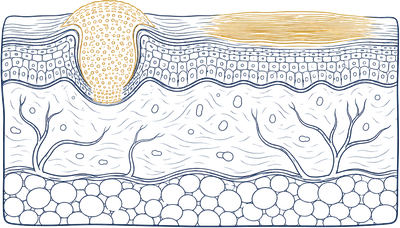
A verruca is a wart-like lesion that appears on the skin, caused by the human papillomavirus (HPV). When it develops under the pressure of body weight, it presses inward and can be surprisingly painful, often feeling like a small stone underfoot. A callus is a thickened, hardened area of skin that forms where there is repeated pressure or friction — most commonly on the feet and hands.
Both are harmless but can be uncomfortable and persistent. When creams, patches and over-the-counter treatments have not worked, CO2 laser removal offers a precise alternative. The laser vaporises the lesion layer by layer with great accuracy, which limits damage to the surrounding healthy skin and supports clean healing.
Signs you may benefit from laser removal
Laser treatment is particularly useful for lesions that are painful or have not responded to simpler measures. Consider an assessment if you have:
- A rough, grainy growth on the sole of the foot, sometimes with tiny black dots
- Pain or tenderness when standing or walking, as if a pebble is underfoot
- Thickened, hardened patches of skin on pressure points of the feet or hands
- A verruca or callus that has not responded to creams or over-the-counter treatments
- A lesion that keeps returning or appears to be spreading
- Discomfort that affects your walking, footwear or daily activities
When to seek prompt care
Most verrucas and calluses are harmless, but any skin lesion that changes in colour, bleeds, grows quickly or looks unusual should be assessed to confirm the diagnosis. People with diabetes or poor circulation should have foot lesions reviewed early rather than self-treating.
How CO2 laser removal works
CO2 laser removal is a quick, precise, day-case procedure. The laser delivers a focused beam of energy that vaporises the lesion in fine layers, giving the Doctor a high degree of control.
- 01
Consultation & assessment
The lesion is examined to confirm the diagnosis and rule out other skin conditions. Suitability for laser treatment is discussed with you.
- 02
Local anaesthesia
The area is numbed with a local anaesthetic so the procedure is comfortable. You stay awake throughout.
- 03
CO2 laser treatment
The laser precisely vaporises the verruca or callus layer by layer, treating the lesion while protecting the surrounding healthy skin.
- 04
Dressing & aftercare advice
A small dressing is applied and you are given clear instructions for keeping the area clean and protected as it heals.
What to know before treatment
- 01Tell the Doctor about all medication you take, and about any condition affecting circulation or healing, such as diabetes.
- 02Wear comfortable, loose footwear to your appointment if a lesion on the foot is being treated.
- 03The number of sessions depends on the size and depth of the lesion — some stubborn verrucas need more than one.
- 04You can usually drive yourself home, as only local anaesthesia is used.
What recovery looks like
Recovery after CO2 laser removal is usually quick and straightforward. The timeline below is a general guide — healing depends on the size and location of the lesion.
Day 1–3
The treated area is small and covered with a dressing. Mild tenderness is normal and eased with simple pain relief. Keep the dressing dry and clean.
Week 1
Most everyday activities are resumed. Follow the advice given for changing dressings and protecting the area.
Weeks 2–4
The treated area heals over with new skin. A follow-up confirms healing is progressing well.
Beyond 4 weeks
The area is usually fully healed. A stubborn or deep verruca may need a repeat session, which is discussed with you.
Contact the clinic if you notice
- •Increasing pain, redness or swelling around the treated area
- •Discharge of pus or signs of infection
- •Fever
- •Bleeding that does not settle with gentle pressure
Frequently asked questions
Creams, patches and freezing can work for simple lesions, but stubborn or painful verrucas and calluses often resist them. The CO2 laser removes the lesion precisely in one focused treatment, with great control over depth and minimal effect on surrounding skin.
Discuss verruca & callus removal with Dr. Koulouteris
A painful or stubborn verruca or callus can be treated precisely with a CO2 laser. Book a consultation for an assessment and a treatment plan suited to you.
This information is reviewed by Dr. Eleftherios Koulouteris, General & Laparoscopic Surgeon. It is for general guidance only and does not replace a personal medical consultation.